
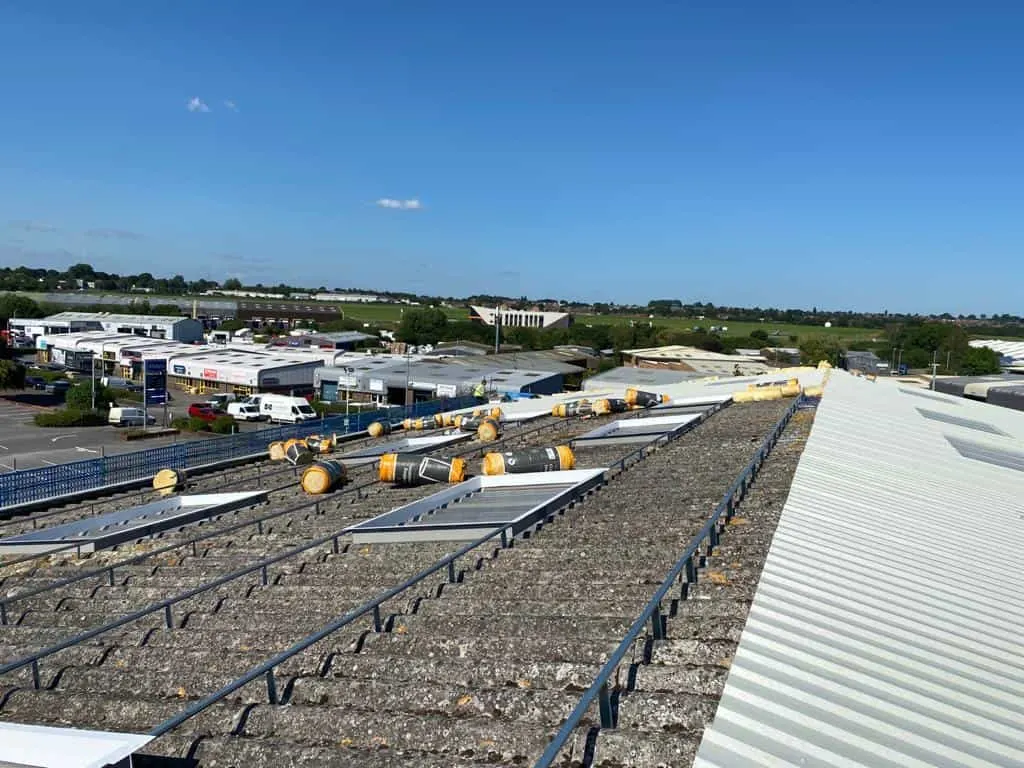
Asbestos cement roofing is common on industrial, farm and commercial buildings put up before 2000. Intact, undisturbed sheets are low risk; cracked, weathered or broken sheets can release fibres. Removing an asbestos cement roof is non-licensed, non-notifiable work, carried out in line with the Control of Asbestos Regulations, and the roof can either be stripped and replaced or overclad.
Ever driven past an old industrial unit, farm building, or warehouse and wondered what that grey, corrugated roof is actually made of? There’s a good chance it’s asbestos cement sheeting – once hailed as a miracle material, now treated with the caution it deserves.
Let’s be honest: asbestos roofing is one of those topics people either ignore or panic about. Some property owners assume every asbestos roof is a ticking time bomb. Others shrug it off because “it’s been there for decades.” The truth sits somewhere in between. Understanding the real risks, the legal responsibilities, and the right asbestos safety measures is what separates costly mistakes from informed decisions.
If you own, manage, or are responsible for a building with asbestos roofing, this guide will walk you through what you actually need to know – without scare tactics, and without sugarcoating the facts.
Why Asbestos Roofing Was So Popular in the First Place
To understand today’s regulations and safety measures, you have to go back a few decades.
Throughout the mid-to-late 20th century, asbestos cement roofing sheets were everywhere across the UK. Agricultural barns, factories, garages, schools, and commercial units were commonly built using corrugated asbestos roofing panels. The material was cheap, lightweight, fire-resistant, durable, and easy to install. For builders at the time, it was a practical solution.
Asbestos fibres were mixed with cement to create strong sheets that resisted heat, weather, and corrosion. For roofing, that combination was ideal – especially for large-span industrial and agricultural structures.
It wasn’t until the long-term health implications of asbestos exposure became widely documented that attitudes began to shift. The UK fully banned asbestos in 1999, but a great deal of asbestos cement roofing remains in place today.
That’s why understanding it properly matters.
What Exactly Is Asbestos Roofing?
Most asbestos roofing in the UK is made from asbestos cement sheets. These are different from the more dangerous friable asbestos products (like loose-fill insulation or sprayed coatings). In cement sheets, asbestos fibres are bound tightly within the cement matrix.
This distinction is critical.
Asbestos cement roofing is considered lower risk than other asbestos materials because fibres are less likely to become airborne – unless the material is damaged, drilled, cut, or deteriorating.
Typical places you’ll find asbestos roofing:
- Industrial warehouses
- Farm buildings
- Garages and outbuildings
- Workshops
- Commercial units built before 2000
Corrugated asbestos roofing sheets are the most recognisable type. They often have a grey, weathered appearance.
But visual inspection alone is never enough to confirm asbestos. Proper asbestos roof surveys and testing are the only reliable methods.
How do I know if my roof is asbestos cement?
You cannot tell for certain by looking. Grey corrugated sheets with a rough, slightly fibrous surface are a common sign, especially on buildings from before 2000, but the asbestos-free fibre cement sheets made since look very similar. Age is the strongest clue: all asbestos products were banned from UK construction in 1999.
Start with the paperwork. The duty holder for a non-domestic building should already have an asbestos register or management plan that records whether the roof contains asbestos. If there is no record, a sample analysed by a laboratory, or a formal asbestos survey, gives a definite answer.
Never break off a corner of a sheet to check it yourself. Snapping, cutting or drilling the material is exactly the kind of disturbance that releases fibres, and asbestos cement roofs are fragile underfoot.
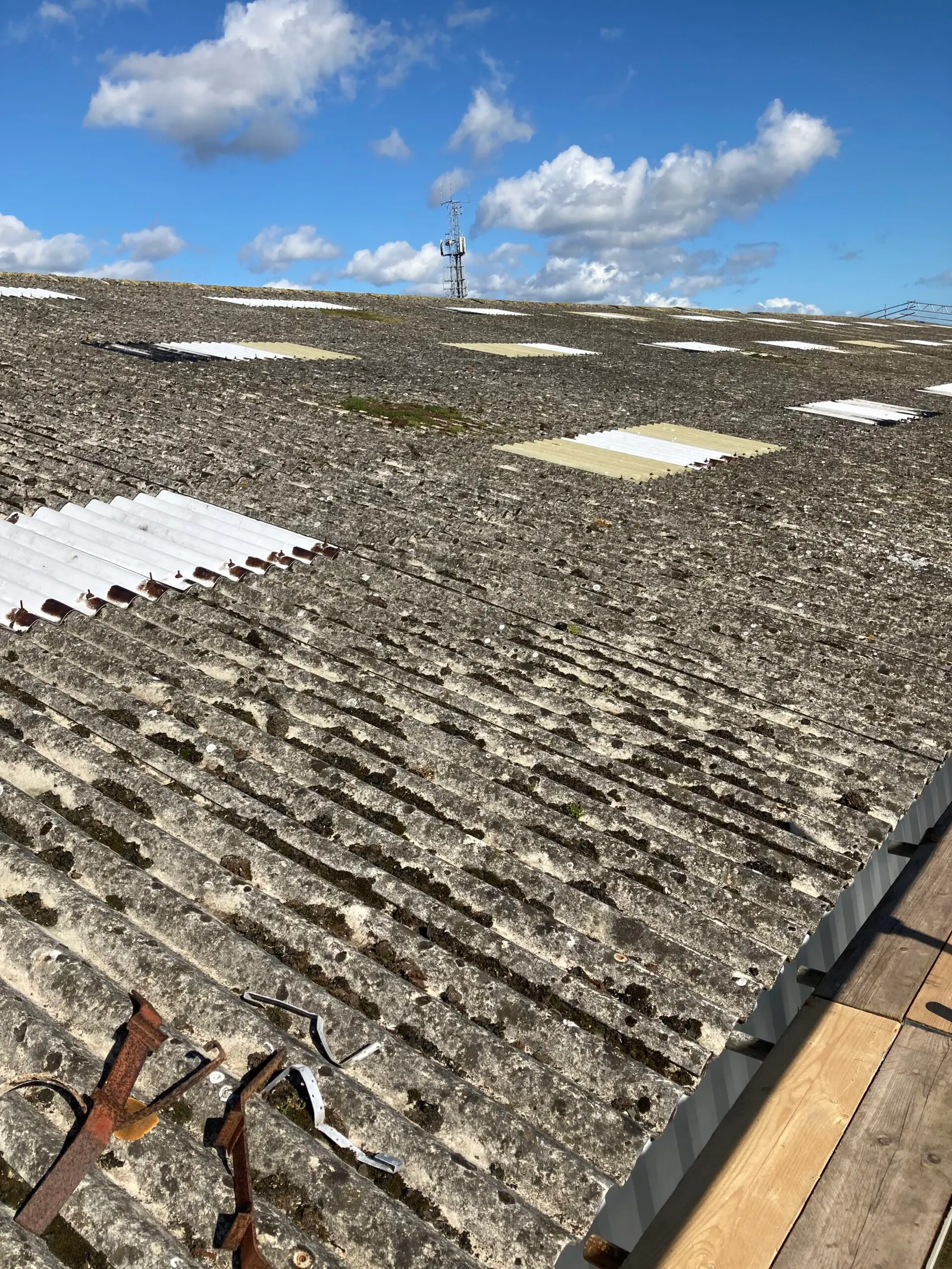
Is an asbestos roof dangerous?
Here’s where clarity matters.
Asbestos is dangerous when fibres become airborne and are inhaled. Prolonged or repeated exposure can lead to serious diseases such as:
- Asbestosis
- Mesothelioma
- Lung cancer
- Pleural thickening
These conditions typically develop decades after exposure.
However, an intact asbestos cement roof that is undisturbed and in good condition does not automatically pose immediate danger. The risk increases when:
- Sheets are cracked, broken, or severely weathered
- The roof is drilled or cut
- High-pressure cleaning is attempted
- Storm damage occurs
- DIY repairs are carried out
This is why professional handling is non-negotiable. Even a simple-looking fix can release fibres if done incorrectly.
Legal Responsibilities in the UK
If you’re responsible for a non-domestic property, the law is clear.
Under the Control of Asbestos Regulations 2012, duty holders must manage asbestos in buildings. That includes:
- Identifying whether asbestos is present
- Assessing its condition
- Keeping an asbestos management plan
- Preventing disturbance
For commercial property owners, landlords, facility managers, and agricultural operators, this isn’t optional.
Failure to comply can result in enforcement action, heavy fines, and prosecution.
If asbestos roofing is present, it must either be safely managed in place or removed by a team competent in non-licensed, non-notifiable asbestos cement work, following the regulations.
Do I have to remove it?
Not always. An asbestos cement roof can stay in place if it is in good condition, is not being disturbed, is inspected regularly and is recorded in the building’s management plan.
Removal or replacement becomes the sensible choice when the sheets are deteriorating or leaking, when storm or impact damage has occurred, when major refurbishment is planned, or when the structure is being demolished.
If the roof does need work, there are two routes. Strip and replace takes every asbestos cement sheet off the building and fits a new roof system to the existing frame. Overcladding leaves the existing sheets in place, encapsulated beneath a new insulated roof, which is less disruptive but needs a structural assessment first to confirm the frame can take the extra weight.
The decision should always rest on a professional survey, not guesswork.
The Dangers of DIY Asbestos Roof Work
It’s tempting for property owners to think, “It’s just a few sheets, I’ll handle it.”
That’s where problems start.
Cutting, grinding, drilling, jet washing, or even breaking asbestos roofing sheets can release hazardous fibres. Without proper containment, PPE, and disposal procedures, exposure risk increases dramatically.
Beyond the health risk, improper handling can also:
- Contaminate surrounding areas
- Trigger legal violations
- Result in expensive clean-up operations
- Invalidate insurance policies
Using a trained team for non-licensed asbestos cement work means the job is planned, controlled and finished with bonded skip disposal to certified sites.
Health & Safety: What Proper Asbestos Roof Work Looks Like
If asbestos roofing removal or replacement is required, safety protocols are strict.
A reputable contractor will implement:
- Risk assessments and method statements
- Controlled removal procedures
- Specialist PPE and respiratory protection
- Dust suppression methods
- Controlled waste handling
- Bonded skip disposal to certified sites
Health and safety isn’t just a checklist – it’s a legal framework that protects workers, occupants, and the surrounding environment.
Tek Clad Ltd is fully insured for all roofing and cladding activities, including non-licensed, non-notifiable asbestos removal, and carries out asbestos cement work in line with the Control of Asbestos Regulations.
Asbestos Roofing Replacement: Modern Alternatives
When replacement becomes the best option, property owners have far better materials available today.
Modern roofing alternatives include:
- Insulated composite panels
- Metal roofing systems
- Fibre cement (asbestos-free) sheets
- Overcladding systems
Many building owners opt for asbestos roofing replacement not just for compliance, but for performance improvements. New roofing systems offer:
- Better thermal efficiency
- Reduced condensation
- Improved structural integrity
- Lower maintenance costs
- Longer lifespan
In some cases, overcladding may be suitable – installing a new roof system over the existing asbestos sheets without full removal. This depends on structural condition and must be professionally assessed.
Environmental Considerations and Disposal
Asbestos waste cannot be treated like ordinary construction debris.
It must be:
- Carefully wrapped and sealed
- Labelled correctly
- Transported by a registered waste carrier
- Disposed of at certified disposal sites
Improper disposal can lead to environmental contamination and severe penalties.
Responsible contractors follow strict waste management regulations to ensure safe and lawful disposal.
Who can remove it?
Asbestos cement roofing and cladding is a different category of material from sprayed coatings, lagging or insulating board. The HSE explains which asbestos work needs a licence and what non-licensed work involves.
Tek Clad Ltd carries out non-licensed, non-notifiable removal of asbestos cement roofing and cladding, in line with the Control of Asbestos Regulations. We are not a licensed asbestos removal contractor and do not undertake licensed asbestos work.
Whoever you appoint, expect a risk assessment and method statement, trained operatives with suitable protective equipment, controlled handling so sheets are not broken, and bonded skip disposal to certified sites. Our NFRC-accredited workmanship covers both strip and replace and overcladding, and warranty documentation is provided on completion.
What affects the cost?
Every asbestos roof is priced on its own survey, because the factors vary so much from one building to the next:
- Roof area, pitch and height, and the access and edge protection needed
- The condition of the sheets, which decides how carefully they must be handled
- Strip and replace or overcladding, and the outcome of the structural assessment
- The replacement system: composite, metal, standing seam or fibre cement
- Roof lights, gutters and wall cladding included in the same job
- Whether the building stays occupied and working during the project
Every project begins with a detailed site survey, so you know the cost before work starts.
If the survey points to removal, see how we handle asbestos cement roof removal, from strip-out to bonded skip disposal. If the roof can stay in place, overcladding encapsulates the existing sheets beneath a new insulated roof.
Knowledge Replaces Fear
Asbestos roofing isn’t a topic to ignore – but it’s not one to panic about either.
The key is understanding the difference between unmanaged risk and controlled management.
With proper surveying, compliance, and professional handling, asbestos roofing can be dealt with safely and responsibly. Whether that means structured monitoring or full asbestos roofing replacement depends entirely on the building’s condition and future plans.
If you’re responsible for a commercial or industrial property and need clarity, a Free Site Survey from Tek Clad Ltd tells you the condition of the roof and your options, followed by a Tailored Quotation if work is needed.
The right approach protects not just the building – but the people who use it.